

The Short Answer:
In Alabama car accidents, fault is determined by reviewing the evidence, applying traffic laws, and deciding whether one driver’s negligence caused the crash. Police officers, insurance adjusters, lawyers, judges, and juries may all evaluate fault at different stages, but no single early opinion automatically controls the outcome.
Alabama’s contributory negligence rule makes fault disputes serious, but an attorney can use evidence to push back against an unfair fault determination so you can recover the compensation you may deserve.
Key Takeaways
- Fault is not determined by a single person. Police officers, insurance adjusters, lawyers, judges, and juries may all evaluate fault at different stages of a case.
- Fault is determined by examining evidence such as police reports, witness statements, photos, videos, vehicle damage, and applicable traffic laws.
- Police reports and insurance decisions can influence a claim, but they are not always final.
- Evidence such as photos, videos, witness statements, vehicle damage, and traffic-law violations can help show what happened.
- Alabama’s contributory negligence rule makes shared-fault arguments especially serious.
- If the insurance company says you caused the crash, a lawyer can review the decision, investigate further, and push back with a stronger explanation of the facts.
Table of Contents
- Who Determines Fault After an Alabama Car Accident?
- What Evidence Is Used to Determine Fault?
- How Alabama Traffic Laws Can Help Show Who Was at Fault
- How Alabama’s Contributory Negligence Rule Affects Fault
- How a Car Accident Lawyer Can Help Determine Fault
- FAQs About Fault in Alabama Car Accidents
- Hurt in a Car Accident? Contact Floyd Hunter Injury Attorneys for Help
Who Determines Fault After an Alabama Car Accident?
After a crash, fault isn’t decided by any single person or authority. Depending on how the claim develops, several different parties may weigh in, and their conclusions don’t always agree. It also depends on whether you’re filing a claim or a lawsuit. That said, here’s who usually has a hand in determining fault after an accident:
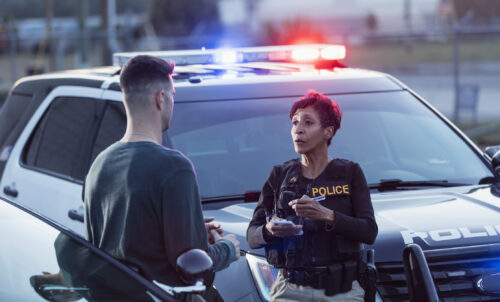
Police Officers
Police officers create a report when they respond to a crash. While it’s useful for determining fault, it’s not a final legal ruling. Also, a police report can be used as important evidence in either an insurance claim or a lawsuit.
Police reports usually include descriptions of the following:
- The scene of the crash
- The road and weather conditions
- Time, date, and location of the accident
- Vehicle information and damages
Law enforcement may also record the names and information of anyone who was injured, as well as witness statements.
Be aware that police reports aren’t always accurate. Officers work with limited information and limited time at the scene. Make sure to review the report to look for any inconsistencies. A lawyer can also help you use the report to seek the compensation you need to recover from your injuries.
Insurance Adjusters
Once a claim is filed, an insurance adjuster steps in to evaluate what happened. Adjusters typically review the police report, photographs, driver and witness statements, repair estimates, and medical records before reaching a conclusion about fault.
It’s worth understanding who adjusters work for. Their job is to protect the insurance company’s financial interests, which means they tend to look for reasons to reduce a payout or deny a claim entirely. Their fault determination isn’t neutral, and it isn’t final.
Car Accident Lawyers
A car accident attorney can conduct an independent investigation that goes beyond what an insurer is willing to do. That may include gathering additional evidence, identifying inconsistencies in the other driver’s account, locating witnesses the adjuster overlooked, and pushing back when the insurance company’s version of events doesn’t hold up.
Judges and Juries
If a claim can’t be resolved through negotiation, a lawsuit may follow. At that point, a judge or jury reviews the evidence and makes the final determination on fault. That outcome is binding, which is why the quality of the evidence gathered early in a case can matter so much later on.
What Evidence Is Used to Determine Fault?
Gathered evidence is obviously a key piece of how fault is determined. If you have strong evidence backing up your claim, that can help protect you if the insurance company is trying to blame you for the accident. In Alabama, this is especially important because the contributory negligence rule is a powerful incentive for insurance companies to shift fault onto you. So having solid, thorough evidence can be the difference between recovering compensation and walking away with nothing.
The evidence used to determine fault after a car accident typically falls into several categories, such as the following:
The crash report is usually the first document anyone looks at. It may include information like:
- Crash location and time
- Driver and vehicle information
- Statements from drivers or witnesses
- Citations or suspected traffic violations
- Road, weather, and lighting conditions
- The officer’s narrative or diagram of what happened
Often, insurance adjusters use these reports to determine fault after an accident. That said, police reports aren’t perfect. They’re prepared quickly, and they can contain mistakes or leave out details that turn out to be important. If your claim ends up going to court, a police report will be far from the last word about who was at fault.
Visual evidence can be some of the most persuasive in a car accident case. Which is why you should take photos and videos at the scene, if you’re in good enough condition. Photos of the following can be especially helpful when determining fault:
- Vehicle positions
- Damage patterns
- Skid marks
- Debris
- Traffic lights, signs, and lane markings
- Road conditions
- Visible injuries
Video footage can be even more valuable when it’s available. Dashcams, nearby business cameras, traffic cameras, and doorbell cameras have all played a role in car accident cases. That footage doesn’t always survive for long, which is one reason why acting quickly after a crash matters. If you’re worried about how to do this, an attorney can help you gather all of this evidence, so you can focus on healing.
A neutral witness who saw the crash can help confirm details that neither driver can objectively provide. Witnesses may be able to speak to whether a driver did something that could place them at fault. For example:
- Ran a red light or stop sign
- Failed to yield
- Made an unsafe lane change
- Was following too closely
- Appeared distracted or impaired
Witness accounts can corroborate a driver’s version of events or directly contradict the other side’s story. Finding and preserving those accounts early is important, since memories fade and contact information can be lost. Make sure to take notes and then follow up with witnesses after the accident. If you work with a lawyer, they can help collect these statements on your behalf.
Read More: Should I Get a Lawyer for a Car Accident?
Where a vehicle is damaged, and how severely, can say a lot about how a crash happened. Physical damage may help show:
- The direction and angle of impact
- The speed involved
- Whether the brakes were applied before the collision
- Each vehicle’s position in the roadway
In serious or heavily disputed cases, accident reconstruction professionals may be brought in to analyze the physical evidence and offer an expert opinion on how the crash unfolded.
Medical records don’t usually prove who caused a crash on their own, but they serve an important supporting role. They can connect an injured person’s injuries to the timing and force of the accident, which matters when the other side tries to argue that injuries were pre-existing or unrelated to the crash.
In some cases, the investigation goes deeper. This type of evidence may include:
- Cell phone records showing whether a driver was texting at the time of the crash
- Vehicle data recorder information capturing speed, braking, and steering inputs in the moments before impact
- GPS or fleet tracking data in cases involving commercial vehicles
This kind of technical evidence isn’t always available, but when it is, it can be difficult to dispute and may directly contradict what a driver claims happened.
Taken together, this evidence forms the foundation of how fault is determined. The more complete and consistent that picture is, the harder it becomes for an insurance company to argue that you’re at fault. If you work with an Alabama car accident lawyer, they can help gather, organize, and use this evidence to advocate for the compensation you may deserve.
How Alabama Traffic Laws Can Help Show Who Was at Fault
Alabama’s rules of the road establish what drivers are legally required to do, and when someone fails to meet that standard, it can go a long way toward showing who caused a crash. Understanding how those laws apply to common accident types can help clarify why fault determinations play out the way they do.
Rear-End Accidents
Alabama law requires drivers to maintain a safe following distance given their speed and road conditions. When a driver follows too closely and can’t stop in time, that’s often the starting point for a fault determination. See Ala. Code § 32-5A-89.
Insurers may still argue that the front driver stopped suddenly, cut someone off, or had a brake light out. Those arguments don’t always hold up, but they’re common enough that good documentation matters.
Left-Turn Accidents
Drivers making a left turn are required to yield to oncoming traffic before crossing. See Ala. Code § 32-5A-111. When that doesn’t happen, fault often follows the turning driver.
These cases tend to generate disputes about speed, turn signals, and what the light showed at the time. Both drivers’ actions need to be examined.
Intersection Accidents
Right-of-way rules govern who goes first at intersections controlled by stop signs, yield signs, and traffic signals. See Ala. Code §§ 32-5A-112, 32-5A-32. Notably, a collision after a driver passes a yield sign without stopping is treated as prima facie evidence of a failure to yield under Alabama law.
When accounts conflict, physical evidence like skid marks, damage patterns, and available video often becomes especially important.
Lane-Change and Merging Accidents
Alabama law requires drivers to stay in their lane and confirm a move can be made safely before changing lanes. Drivers are also required to signal before turning or merging. See Ala. Code §§ 32-5A-88, 32-5A-133. How fault is determined in these cases often comes down to whether those basic steps were followed.
Multi-Vehicle Accidents
When more than two vehicles are involved, determining fault gets more complicated. One driver may have been behind the initial crash, but each driver’s conduct still needs to be reviewed. Insurers will often look at every driver individually, which is why Alabama’s contributory negligence rule can make these cases particularly challenging for injured people.
How Alabama’s Contributory Negligence Rule Affects Fault
Most states use some form of comparative negligence, which allows an injured person to recover compensation even if they were partly responsible for a crash. Alabama is different. The state follows contributory negligence, which means that if the injured person’s own negligence contributed to the accident, even by 1%, you may not be able to recover anything at all.
Why Insurance Companies Focus on Shared Fault
When an insurer knows that even a minor fault argument could eliminate their liability entirely, they have a strong financial incentive to find one. Adjusters may look for anything suggesting the injured person was speeding, distracted, following too closely, ignoring a traffic signal, or otherwise contributed to the conditions that led to the crash.
Examples of Shared-Fault Arguments
These arguments don’t have to be dramatic to be damaging. Some of the more common ones include:
- “You were speeding, so you couldn’t have avoided the crash.”
- “You were distracted and didn’t react in time.”
- “You changed lanes without checking your blind spot.”
- “You stopped suddenly without a reason.”
- “Your own statement suggests you accepted some responsibility.”
None of these arguments is automatically correct, but each one can become a serious obstacle if it isn’t addressed with evidence.
How You Can Avoid Admitting Fault
After a crash, it’s natural to want to apologize or explain what happened. Resist that urge. Saying things like “I’m sorry” or “I didn’t see you” might feel like basic courtesy, but those words can be taken out of context and used against you later.
That’s especially true in Alabama, where the contributory negligence rule is unforgiving. Any statement that hints at shared responsibility could give the other side grounds to argue you can’t recover compensation at all.
Stick to exchanging the necessary information, cooperate with law enforcement, and let the evidence speak for itself. For a more detailed breakdown of what to do after a collision, read our guide: What To Do After a Car Accident That’s Not Your Fault in Alabama.
How a Car Accident Lawyer Can Help Determine Fault
Insurance companies have teams of adjusters and attorneys working to protect their interests. A car accident lawyer levels that playing field.
An attorney can help your case by:
- Investigating the crash independently
- Gathering evidence that the insurer overlooked
- Locating witnesses and taking statements
- Preserving video footage before it disappears
- Working with reconstruction professionals on serious or disputed cases
You don’t have to do this on your own. If the insurance company is blaming you, delaying your claim, or refusing to accept responsibility, a car accident lawyer from Floyd Hunter Injury Law can review what happened and explain your options. Perhaps most importantly, a lawyer can help clearly connect and present the evidence to show how the crash happened and why fault should be assigned to the responsible party.
FAQs About Fault in Alabama Car Accidents
It’s possible, but it will be difficult. Alabama’s pure contributory negligence rule makes it easy for the other side to challenge your claim. If they prove you are even 1% at fault, then you can’t recover compensation. However, an experienced attorney can fight to protect your rights and for the compensation you may deserve.
Helpful evidence may include the police report, photos, videos, witness statements, vehicle damage, medical records, and proof that another driver violated a traffic law. The most useful evidence usually depends on how the crash happened. For example, witness statements may matter more in a disputed intersection crash, while vehicle damage may be especially important in a rear-end accident.
No, it’s not. A police report can strongly influence how an insurance company approaches a claim, but it’s not binding on an insurer, and it’s not a legal ruling.
If the report doesn’t accurately reflect what happened, it can be challenged. Stronger evidence, such as witness statements, photos, video footage, or accident reconstruction, can shift the picture. In some cases, it’s also possible to request a factual correction to the report itself.
The bottom line is that a police report is a starting point, not a verdict.
Absolutely. Insurance companies make fault determinations based on available evidence, and it’s not always complete. It’s also important to remember that adjusters work for the insurance company, not you. Their conclusions may reflect their employer’s financial interests as much as the facts. If your claim was denied or fault wasn’t ruled in your favor, you can still seek compensation.
If an insurer is blaming you for a crash, there are steps worth taking:
- Ask for the basis of their decision in writing.
- Avoid giving additional recorded statements before speaking with an attorney.
- Gather any evidence that contradicts their version of events.
- Have an attorney review the claim and push back with a more complete picture of what happened.
That last step matters more than people realize. An experienced car accident attorney knows how insurers build their cases and how to challenge them.
If the other driver gives a false version of events, a lawyer can help look for inconsistencies between their story and the evidence. For example, they may compare the other driver’s statement against the crash report, vehicle damage, witness accounts, photos, videos, and the layout of the accident scene. If the details don’t line up, your lawyer can use those problems to challenge the other driver’s story and push back against an unfair fault decision.
You don’t have to accept the insurance company’s decision as the final word. Insurance companies may blame you to reduce or deny what they owe, especially in Alabama, where contributory negligence can make fault disputes more serious. Before you give another statement or accept the decision, consider speaking with a lawyer who can review the insurer’s reasoning and explain your options.
Alabama’s general personal injury deadline is 2 years under Ala. Code § 6-2-38, which includes most car accident lawsuits. However, some exceptions may apply depending on the details of your case. Either way, you shouldn’t wait to start the process because evidence can fade, deadlines can approach quickly, and delays may make it harder to build a strong lawsuit.
Hurt in a Car Accident? Contact Floyd Hunter Injury Attorneys for Help
At Floyd Hunter Injury Law, we can investigate the accident, gather evidence, identify weaknesses in the insurance company’s position, and advocate for your side of the story. Whether the insurer is blaming you, relying on an inaccurate police report, or accepting the other driver’s version of events without question, our team can review what happened and explain your legal options.
If you were injured in a car accident in the River Region of Alabama, don’t let the fault get unfairly placed on you. Contact Those Thumbs Up Guys® today for a free case review.